Spotting Straight-Line Wind Damage on Oklahoma Roofs
Living in Oklahoma means accepting that our weather can change in the blink of an eye. When the volatile spring months arrive and storm season officially kicks into high gear, most homeowners immediately begin worrying about the threat of large hail and tornadoes. However, one of the most common and insidious threats to your home is often completely overlooked: straight-line winds. Here in Oklahoma City and the surrounding communities, these powerful, relentless gusts can cause significant harm to your property without you even realizing it from the ground.
Unlike a massive hailstorm that leaves obvious dents in your gutters or a tornado that makes headline news, wind damage is often a silent killer of roofing systems. It compromises the structural integrity of your shingles slowly, leaving your home vulnerable to the next heavy rainfall. Understanding how to identify this specific type of weather damage is crucial for protecting your largest investment. In this guide, we will walk you through the mechanics of wind damage, the subtle signs you should look for, and the steps you need to take to secure your home before a minor issue turns into a major interior leak.
What Exactly Are Straight-Line Winds?
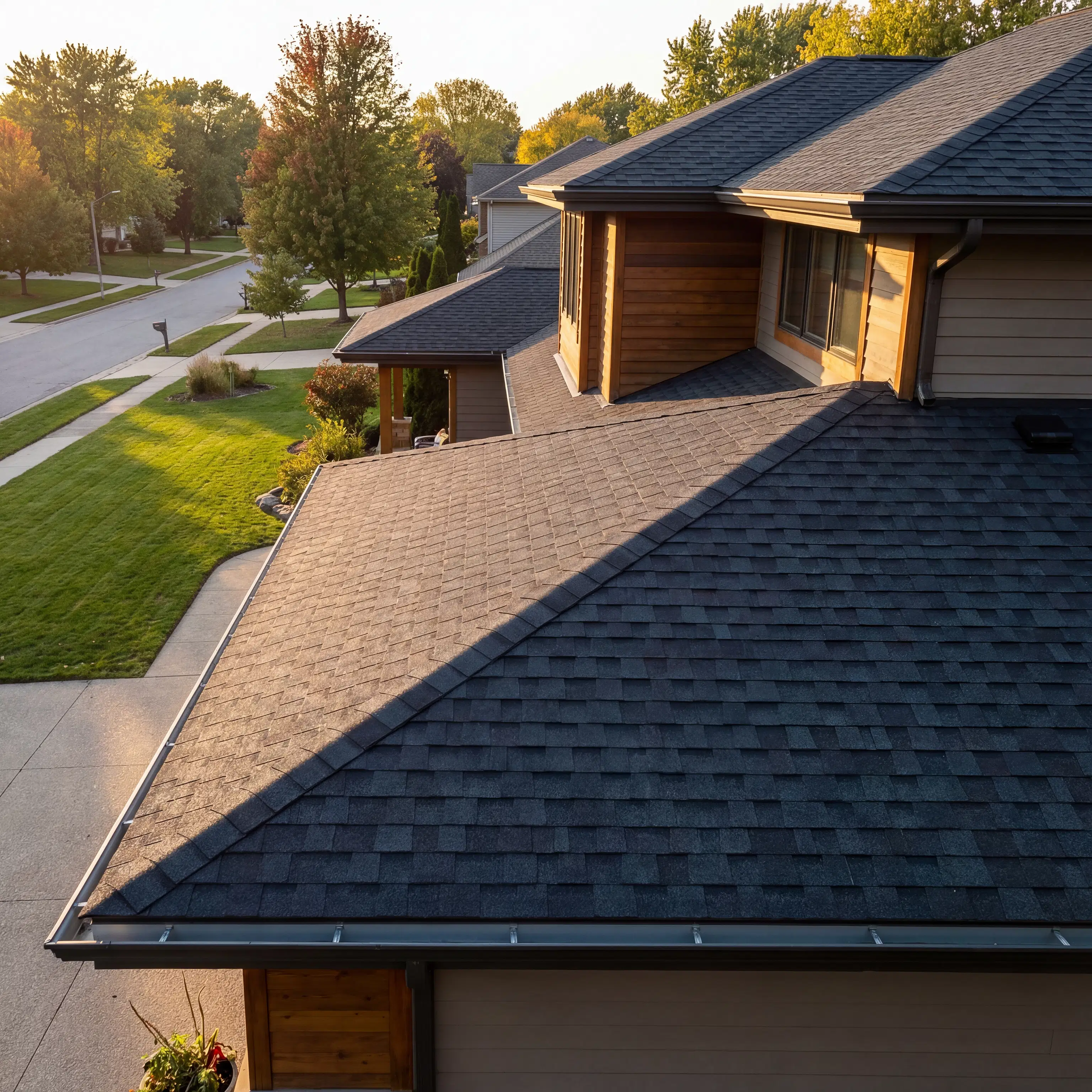
When meteorologists talk about straight-line winds, they are referring to any strong wind that is not associated with rotation. These winds can easily exceed 60 to 80 miles per hour during severe thunderstorms. Unlike the chaotic, swirling vortex of a tornado, these winds push forcefully and continuously in one single direction. This relentless Oklahoma wind hits the exterior walls of your home and is forced upward, catching the overhanging edges of your roofing materials and acting like a powerful lever.
Over time, or during a particularly severe microburst, this upward pressure compromises the integrity of your roofing system. Homeowners frequently ask us how to differentiate straight-line wind damage vs hail damage. The distinction is actually quite clear once you know what to look for. While hail leaves distinct bruises, circular dents, or fractures on the surface of the shingle, wind damage is entirely about lifting, tearing, and creasing. Wind attacks the edges and the adhesive seals of the roof, whereas hail attacks the surface area directly.
Key Signs Your Roof Has Suffered Wind Damage
Spotting wind damage from the ground can be incredibly difficult, which is why we always recommend having a professional take a look. However, there are a few indicators you might notice around your property that suggest your roof has taken a beating.
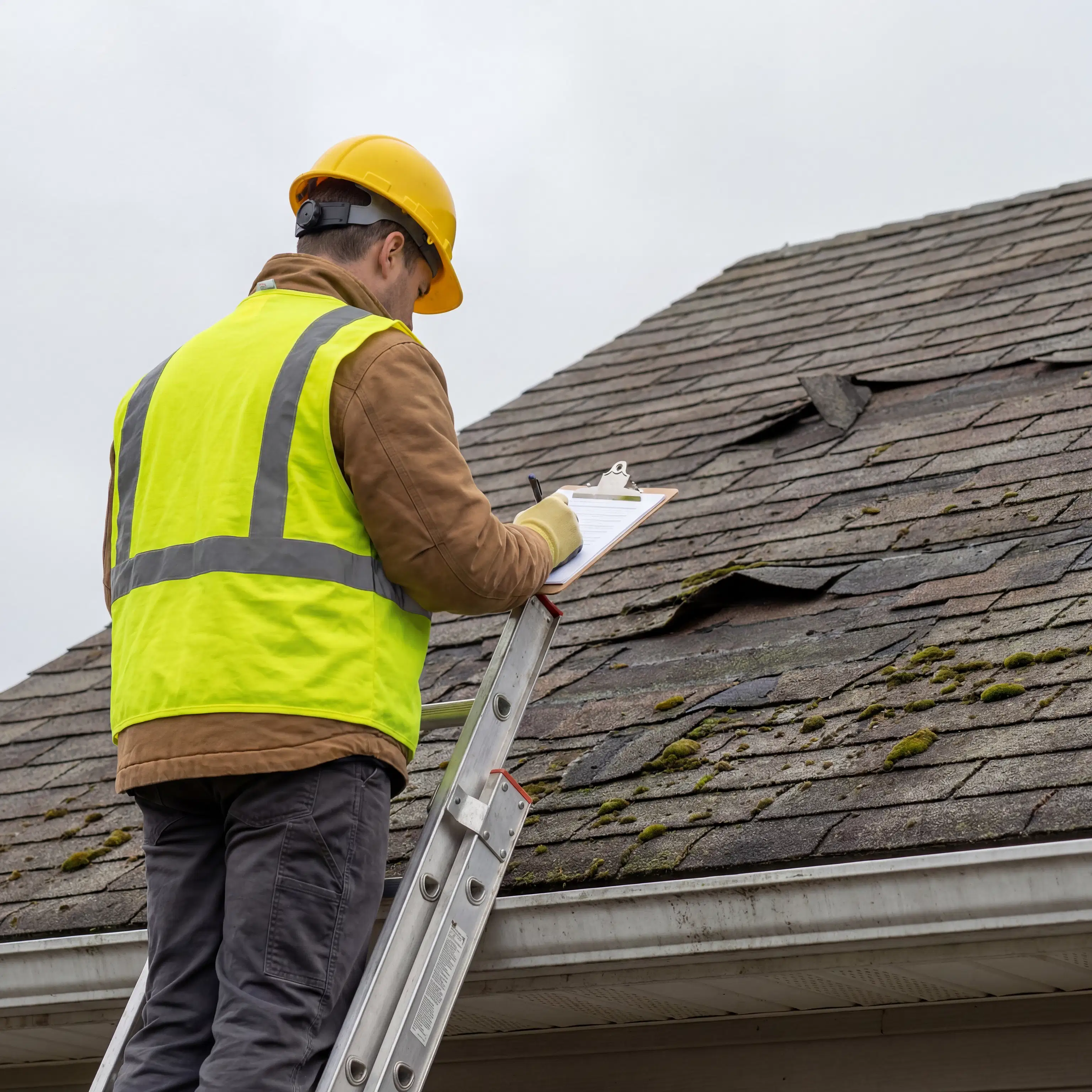
One of the most common issues we find are creased shingles from high winds. When a strong gust catches the bottom edge of a shingle, it bends it backward. Even if the shingle eventually falls back into its original place, the extreme bending snaps the fiberglass matting inside. This leaves a dark, horizontal crease across the top of the shingle. Once that fiberglass is broken, the shingle loses its ability to shed water effectively and is highly likely to tear off completely during the next storm.
Another hidden danger involves shingle uplift inspection signs. Modern shingles are manufactured with a strip of adhesive sealant that bonds them to the shingle below. Powerful winds can break this seal without actually folding the shingle back. This is known as uplift. Because the shingle looks perfectly normal from the ground, uplift is incredibly deceptive. However, that broken seal means wind-driven rain can now easily blow underneath the roofing material and reach your wooden decking.
Of course, the most obvious sign of trouble is finding missing shingles in your yard or driveway. If you see exposed underlayment or bare wood on your roof, you need to schedule a roof repair immediately to prevent water intrusion. Additionally, keep an eye out for excessive granule loss. High winds can strip the protective mineral granules off your asphalt shingles. You might notice these granules washing out of your downspouts, sometimes mixed with the fine red dirt that gets blown around our state during dry spells.
The Hidden Dangers of Ignoring the Problem
It is incredibly tempting to ignore a few flipped or creased shingles, especially if your roof isn't actively leaking into your living room. However, waiting is the most expensive mistake a homeowner can make. A compromised roof is a ticking time bomb. When the adhesive seal is broken, water will eventually find its way underneath. This moisture gets trapped against the wooden roof decking, leading to wood rot, dangerous mold growth in your attic, and eventually, ruined drywall and insulation inside your home.
Many homeowners wonder how to choose between repairing a small leak and getting a full replacement. If caught early enough, isolated wind damage might only require a targeted repair. But if left unaddressed through multiple weather cycles, the structural damage spreads, often necessitating a complete roof replacement.
This is why proactive, professional inspections are so vital. At Resolute Roofing Company, we utilize modern drone-based roof inspections and AI-driven damage assessment software. This technology allows us to safely and accurately assess your property, ensuring we catch every single compromised area without causing further harm to your roof by walking on weakened spots.
Navigating Insurance and Avoiding Storm Chasers
A common question we hear is whether homeowners insurance covers wind damage. In most cases, standard policies do cover damage caused by severe windstorms. However, navigating the complex insurance claim process and dealing with adjusters can be incredibly stressful.
This stress is often compounded by the influx of out-of-state "storm chasers" who flood The Metro immediately following severe weather. These transient companies often knock on doors offering to waive deductibles—which is illegal under Oklahoma law—and use high-pressure sales tactics. They frequently perform subpar work and leave town long before their warranties expire, leaving local homeowners stranded if a leak develops months later.
To protect yourself, always verify that your contractor is registered with the Oklahoma Construction Industries Board (CIB) and has a physical, local office. A reputable, local roofing company will act as your advocate. We provide a thorough emergency wind damage roof assessment that you can hand directly to your insurance adjuster, complete with photographic evidence of every creased or lifted shingle.
Furthermore, if your roof does require a full replacement, this is the perfect time to ask about upgrading to Class 4 impact-resistant shingles. Not only are these premium materials engineered to withstand our severe weather far better than standard architectural shingles, but installing them can also qualify you for significant, long-term discounts on your homeowners insurance premiums.

Secure Your Home Before the Next Storm
Your roof is your home's first and most important line of defense against the elements. When straight-line winds compromise that defense, you cannot afford to wait for the next heavy rainstorm to find out if your living room ceiling is going to hold up. Whether you live down in Moore, up in Edmond, or anywhere else in our service area, having a trusted local expert evaluate your property is the smartest financial move you can make.
If you suspect your home has taken a beating recently, or if you are just fixin' to replace an aging roofing system before the weather turns rough again, we are here to help. Don't leave your home's safety to chance or to out-of-state door knockers. Contact Resolute Roofing Company today to schedule a comprehensive storm damage evaluation. Our team is ready to provide honest answers, transparent estimates, and the high-quality craftsmanship your home deserves.